Available for Freelance
Get a Quote



To mix vocals well, start with a clean, well-performed take. Set a solid level, cut what gets in the way, control dynamics, tame sibilance, and add only as much delay and reverb as the song needs, so the voice sits on the track instead of floating apart from it. Work in that order, and listen in context, not soloed.
The vocal is the part most listeners follow. If it’s buried, harsh, or pasted on top, a homemade record sounds homemade, however good the beat is.
This is how to mix vocals for home producers and artists who are mixing their own songs or getting files ready to send out. It’s written from a working mix room in Burbank, not a plugin-affiliate list.
A mix can’t rescue a clipped, noisy, or half-hearted vocal. Plugins shape a good take. They don’t create one.
“Good enough to mix” means:
Then set up the session so whoever mixes it (you included) isn’t guessing. When we take in a song for mixing at Little Big Room, we ask for roughly this:
Any mixer benefits from these habits, not just us, because they separate creative choices from technical cleanup.
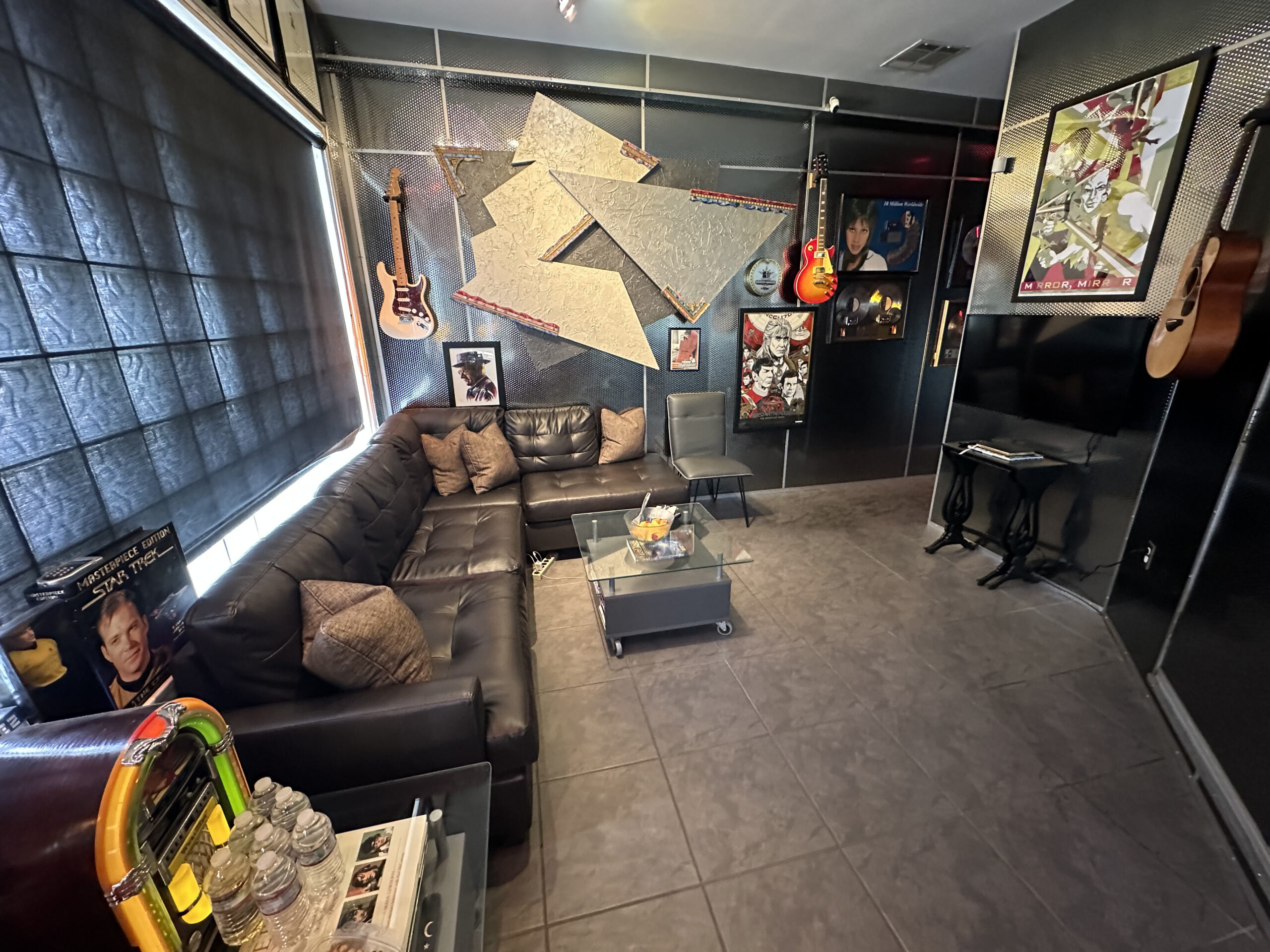
If the take isn’t there, recut it before reaching for plugins. Our Burbank room has a dedicated 11′ × 5′ vocal booth, and a vintage Neumann U47 is one of the mic options. Wherever you record, getting the take right is the cheapest fix there is.
You can change this order later. For now, make it your default.
Before you touch EQ, get the vocal roughly right against the full track with only the fader.
This is about taste, not surgery.
Tune when a note distracts from the song, not because a graph says it’s a few cents off.
Most vocals improve when you take things away before adding “presence.”
These ranges are where to start looking, not a recipe. Every voice, mic, and room is different.
Compression keeps the vocal steady, so the listener never reaches for the volume knob.
One or two well-set stages beat five stacked presets. If you need crushing compression just to keep the vocal audible, fix it with rides (step 8) or with the recording.
Compression and presence boosts push “s” and “sh” sounds forward. A de-esser turns them down only when they happen.
Effects should do a job in the song, not wash over everything by default.
This is where a vocal mix usually comes together.
Nobody hears your plugin count. Everybody hears a word they can’t understand.
Most “how do I make my vocal sit in the mix” problems come down to one thing: stop judging the vocal by itself.
Why solo-only mixing fails. A vocal that sounds big and bright soloed often turns harsh once the track comes in, and one that sounds a bit dull soloed can be perfect in context. Solo to find a problem. Unsolo to decide how much to fix it.
Leave a pocket instead of turning it up. If the vocal keeps getting lost, look at what’s fighting it: bright guitars, busy hi-hats, or a hook instrument playing over the lyric instead of between lines. A small cut on the competing part, or a sidechained dip while the vocal sings, often does more than another 2 dB on the vocal fader.
Doubles, harmonies, and ad-libs. Keep doubles a little lower and darker than the lead. Pan harmonies so the lead owns the center. Treat ad-libs as call-and-response, and mute the ones that step on the lyric.
Everyone who mixes has made all of these, often on the same song.
DIY makes sense for demos, songwriting drafts, learning, and tight budgets. You learn more by mixing ten songs than by reading about one. For short, practical tips, Brad’s YouTube channel, 1 Minute Mixing Madness, is a good next stop.
A professional mix is worth it when the song is going out publicly, when the vocal is the record, or when you’ve been stuck on the same chorus for weeks and can’t hear it clearly anymore.
At Little Big Room, mixing is done by Brad Gilderman. He’s a Grammy-nominated mixer and engineer with more than 40 years of experience, including seven years as lead mixer for American Idol, and he has worked with artists such as Michael Jackson, Tom Petty, Kelly Clarkson, and Whitney Houston. Here’s how a mix runs:
| Step | What happens |
|---|---|
| Send files | Pro Tools session or WAVs from 00:00, labeled, with a rough mix and must-keep FX printed |
| Mix 1 | You get the first mix to review |
| Notes | One consolidated list (timestamps help) or a scheduled review |
| Delivery | After your approval: master, instrumental, TV mix (instrumental plus background vocals, no lead), acapella, and industry-standard stems |
Online mixing starts at $300 and is guaranteed within 10 days. You can also mix or recut vocals in person at the Burbank studio. Mastering isn’t included unless it’s specified, and we can recommend a trusted mastering house if you’d like one.
Start with the take: clean recording, consistent mic distance, and a performance you believe in (warming up helps too). In the mix, set the level against the track, cut mud and harshness before boosting, compress gently, and ride the fader so every word reads.
Usually corrective EQ comes first (high-pass plus mud and harshness cuts), so the compressor isn’t reacting to rumble. Tone-shaping EQ can go after. Both orders work, so pick the one that sounds better on this vocal.
Loud enough that every important word is clear in the busiest section, and quiet enough that it still feels like part of the band. Pop and rap usually sit the vocal forward, while some rock styles tuck it in. Compare against a commercial reference in your genre at matched volume.
Less than you think. Raise it until you notice it, then back off a little. Many modern vocals lean on delay more than reverb.
With the track. Soloing helps you find clicks, harsh notes, or noise, but decisions about level, EQ, and effects only make sense in context.
Send the song for an online mix. Online mixing starts at $300, guaranteed within 10 days. Or book a vocal session in Burbank to recut the lead or mix in the room at 2912 West Burbank Blvd. You can also email Brad@littlebigroom.com.
